
The ladder was tied down with shoelaces
My first week running a small wiring company, a ladder flew off one of our trucks on the highway.
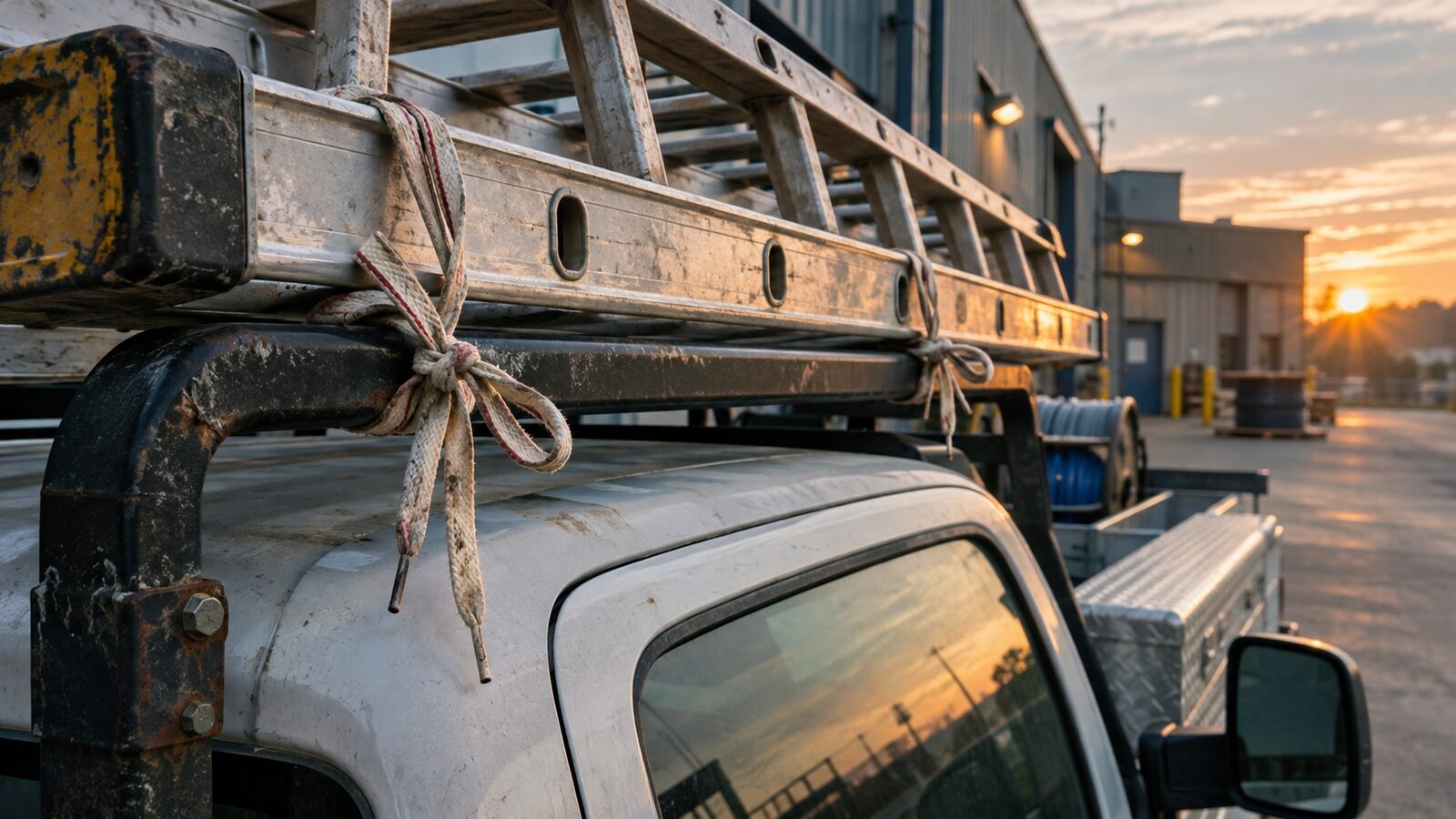
Nobody was hurt, thankfully. But when I asked how it happened, I learned the previous owner did not want to spend the money on ladder ties. So the crew had been tying ladders down with shoelaces.
Shoelaces.
We had saved a few dollars and put people's lives at risk. One bad afternoon could have changed everything for a family, the company, and someone who had no idea a ladder was coming toward them.
I still think about that ladder because I have come to believe most companies have shoelaces somewhere. A process everyone knows is broken. A decision that keeps getting pushed back. A customer frustration we have heard so many times that we no longer take it seriously.
We tell ourselves it is fine for now. And maybe it is. But for how long?
I've been thinking about what it would take to build a company that lasts 100 years. Not just a profitable one, but a healthy one that can survive new competitors, new leaders, and its own mistakes.
Blue Zones are places associated with unusually long lives. I wonder what that would look like in business. I call them Blue Zone Companies.
What is the risk of not doing it?
When I led technology teams, we talked about cost, level of effort, and return on investment. Those were all fair questions. But I kept asking one more:
What is the risk of not doing it?
What happens if we leave the problem alone for six months? A year? Ten years?
Think about working out. If you are in decent shape, you can miss a workout and be okay. Maybe even a few weeks. But what if you keep making that choice for ten years?
Or think about your marriage. You can come home late one night. You might have a demanding week when you are barely present. But what if that becomes your life for a year? For ten years? One evening probably will not change your marriage. Thousands of evenings will.
That is what worries me about the decisions we put off in business. The consequences rarely announce themselves on day one.
The workaround becomes the process. The process becomes how we train people. The people who know why it works that way eventually leave. Now the next team has inherited a problem nobody knows how to undo.
We think we are saving time or money. Sometimes we are just allowing the cost to compound.
The danger of being number one
Recently, I was asked a question I love: What product would you improve, and why?
I chose my Garmin watch. I switched from an Apple Watch because I wanted something built around running. Garmin gives me great training information, but some basic things take too many steps to find or use.
If I were improving it, I would start with what runners use every day and make those things easier. Not more features. Less work to get to the ones that matter.
That might sound small. But small frustrations are often where competitors find their opening.
Look at Nike.
Nike had the name, the style, and shoes people wanted to wear. But while it leaned heavily into lifestyle classics, brands like HOKA, On, and New Balance were winning over runners. Nike's own leadership later acknowledged it had relied too much on those classics and needed to put sport back at the center.
In 2025, U.S. running footwear sales grew 8.9%. Nike lost market share.
Think about that. The market grew. People were still buying running shoes. More of them were simply choosing somebody else.
What did waiting cost?
Nike's annual revenue fell from $51.4 billion in 2024 to $46.4 billion in 2026. Nearly $5 billion less a year. Profit fell from $5.7 billion to $3.1 billion. Not all of that came from running shoes. Nike has other challenges, too.
But the work of turning things around is far from over. Nike Direct sales were still down 8% in its latest reported quarter, and Nike expects about $1 billion in charges from a broader company restructuring through 2031.
How many runners complained before Nike started changing course? How many people inside the company saw it coming? I do not know. But it is easy to overlook a weakness when you're number one. You tell yourself, We've made it this far. Why change?
It is easier to build strong children than to repair broken men.
That is Nike's challenge now. It would have been easier to make changes while runners were still loyal. Now Nike has to improve its running lineup, rebuild relationships with stores, and convince runners who love another brand to give it another chance.
Even a better shoe does not guarantee that customer comes back. Fixing the product is one thing. Repairing the relationship is another.
That is what makes waiting so expensive. The longer you ignore the weakness, the more you may have to repair. Fix it, find a partner, or buy the capability you are missing. Just do it while you still have room to lead, not only when you are forced to catch up.
I don't think the companies that last are the ones that never make mistakes. I think they're the ones willing to face what's wrong before the cost of waiting catches up with them.
What does it mean to last?
Japan offers an interesting picture of what that can look like. A recent Teikoku Databank analysis counted more than 46,000 Japanese businesses over 100 years old. Kongo Gumi, a Japanese temple builder whose history dates to the year 578, became part of a larger construction group in 2006. Its ownership changed, but its work continued.
To me, that is the point. Lasting does not mean refusing to change. It means knowing what is worth protecting and being willing to change what is not working.
I have written before about planting trees whose shade we may never sit in. I keep coming back to that picture because it asks something of us that quarterly reports cannot measure.
What are we building that someone else will be grateful to inherit?
Maybe it is a safer workplace. Maybe it is an employee who was given an opportunity and learned to lead. Maybe it is a business that provides steady jobs to families in a community for generations. Maybe it is a system that still works when the person who built it is no longer around to explain it.
We may never see the full benefit of those decisions. We may never get credit for them either.

And that is okay. The point of planting the tree is that someone else has shade when they need it.
I do not know whether any company I lead will still be here in a hundred years. Nobody can promise that. But I do know we can make decisions that give it a better chance.
So before we push something off again, I want us to ask the question I asked my teams:
What is the risk of not doing it?
Not just tomorrow. Six months from now. A year from now. Twenty years from now.
Because sometimes the difference between a company that lasts and one that does not starts with something as ordinary as buying proper ladder ties.
Sources and further reading
YipitData: Footwear Market Trends 2026 (2025 U.S. running-footwear growth and brand shares).
Nike: 2025 shareholder meeting transcript (leadership's performance-footwear strategy).
Nike: FY2026 Form 10-K (companywide revenue and profit).
Nike: Q1 FY2027 results (Nike Direct decline and restructuring). Nike's companywide changes are not all attributable to running shoes.
